Establish
Seedlings or divided rhizomes are planted into moist soil beneath managed forest shade.
THE FRAGRANT SEED
Elettaria cardamomum (L.) Maton
SPICE & SOURCE
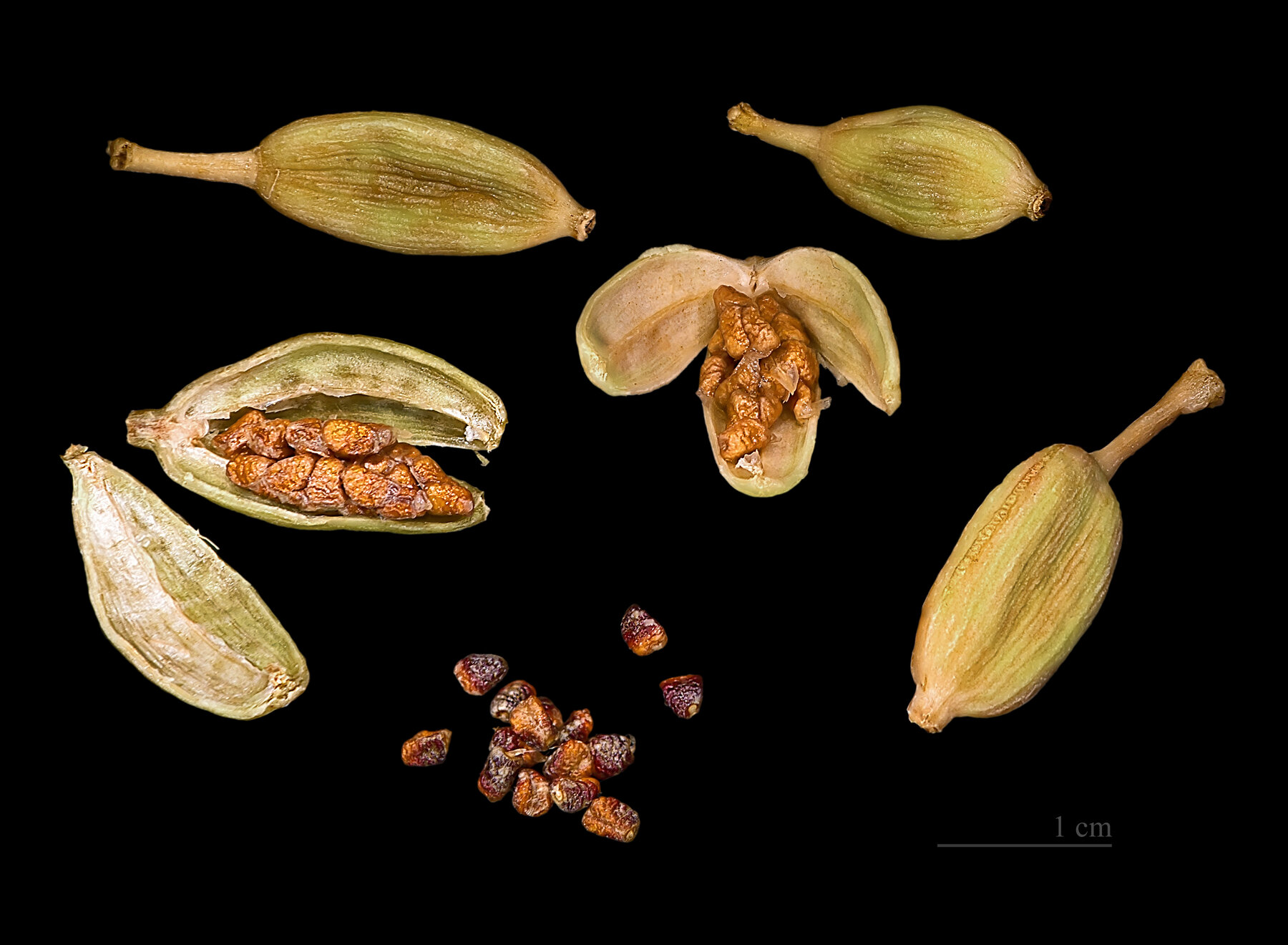
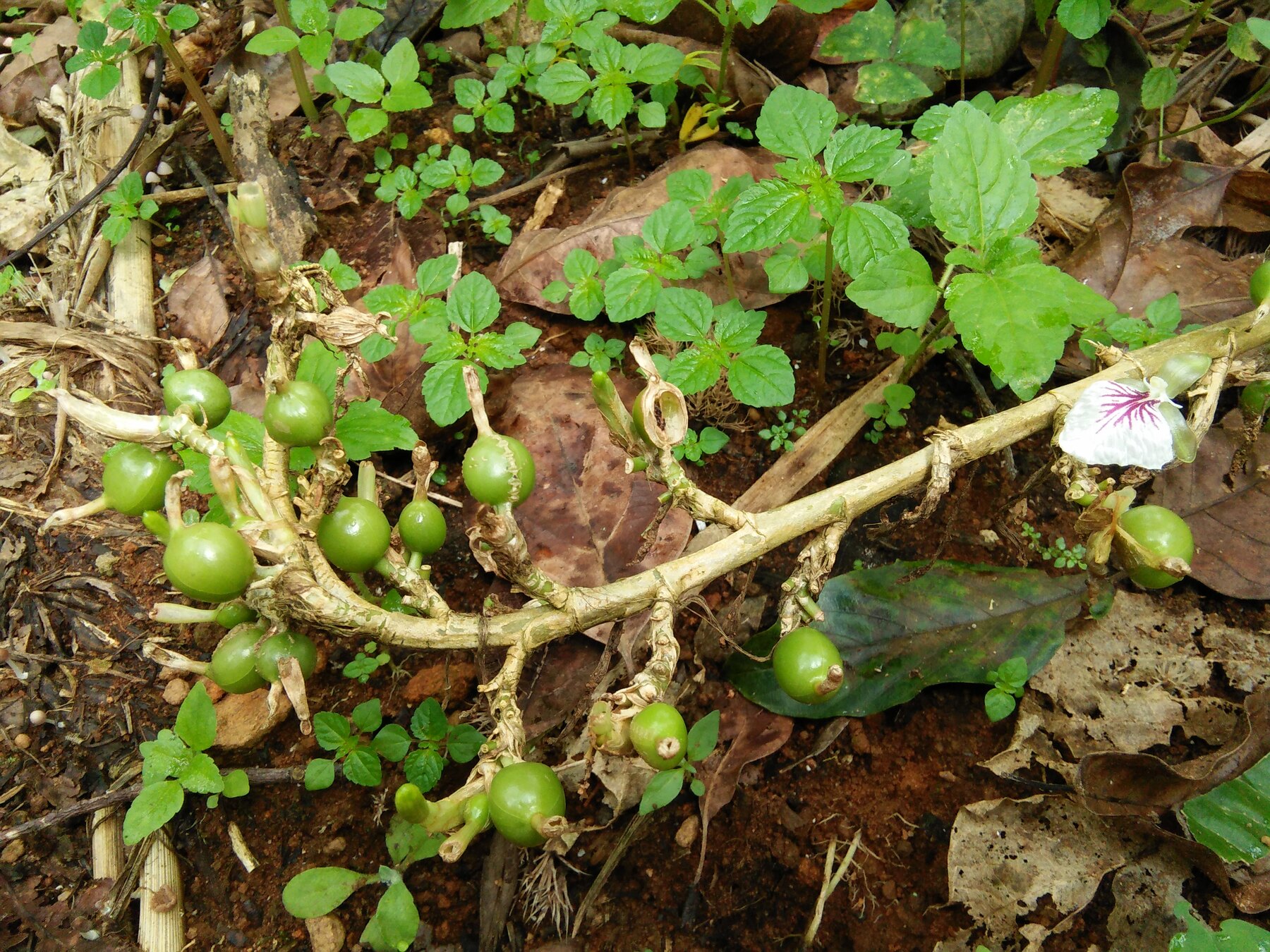
The familiar green capsule protects clusters of intensely aromatic seeds. On the plant, flowers and fruits appear close to the ground on shoots separate from the tall leafy stems.
AROMA FROM THE SHADE
Green—or small—cardamom is a perennial herb in the ginger family. Its leafy shoots may rise several meters, while flower-bearing shoots spread near the soil and develop three-sided capsules filled with dark seeds.
The species is closely associated with the rain-fed forests of southern India's Western Ghats. Cultivation extends that forest ecology: filtered shade, moisture, organic ground cover and careful hand harvest.
MANY LANGUAGES · ONE SPICE
THE JOURNEY
A simplified cultural path showing how one fragrant seed entered very different food traditions.
Cardamom's early story belongs to humid South Indian landscapes and the communities who learned to tend, gather and trade it.
Merchants carried cardamom through Arabian Sea networks, connecting southern India with ports and markets across West Asia.
It became at home in South Asian sweets and rice dishes, Arabic coffee and tea, and later Scandinavian baking.
Green cardamom is now grown beyond India, with Guatemala becoming a major commercial producer.
FROM SHADE TO CAPSULE
Seedlings or divided rhizomes are planted into moist soil beneath managed forest shade.
Low, spreading flower shoots emerge from the plant's base and are visited by pollinators.
Capsules mature unevenly, so skilled workers return repeatedly to harvest them by hand.
Careful drying lowers moisture while protecting the capsule's color and the seeds' volatile aroma.
THE SENSORY PROFILE
Crushed seeds release a layered aroma: floral and citrus-bright at first, then eucalyptus-like, resinous and gently warm. Whole capsules perfume liquids slowly; freshly ground seeds speak more boldly.
RESEARCH LENS
Cardamom's aroma comes from a complex mixture of volatile compounds. Chemical composition and laboratory findings can help explain flavor or biological activity, but they do not establish a clinical treatment.
Divine Spices separates everyday culinary use, traditional practice and evidence from controlled human studies. This profile is educational and is not medical advice.
STARTING SOURCES