Climb
The perennial vine grows upward on support trees or posts in warm, humid conditions.
THE KING OF SPICES
Piper nigrum L.
SPICE & SOURCE
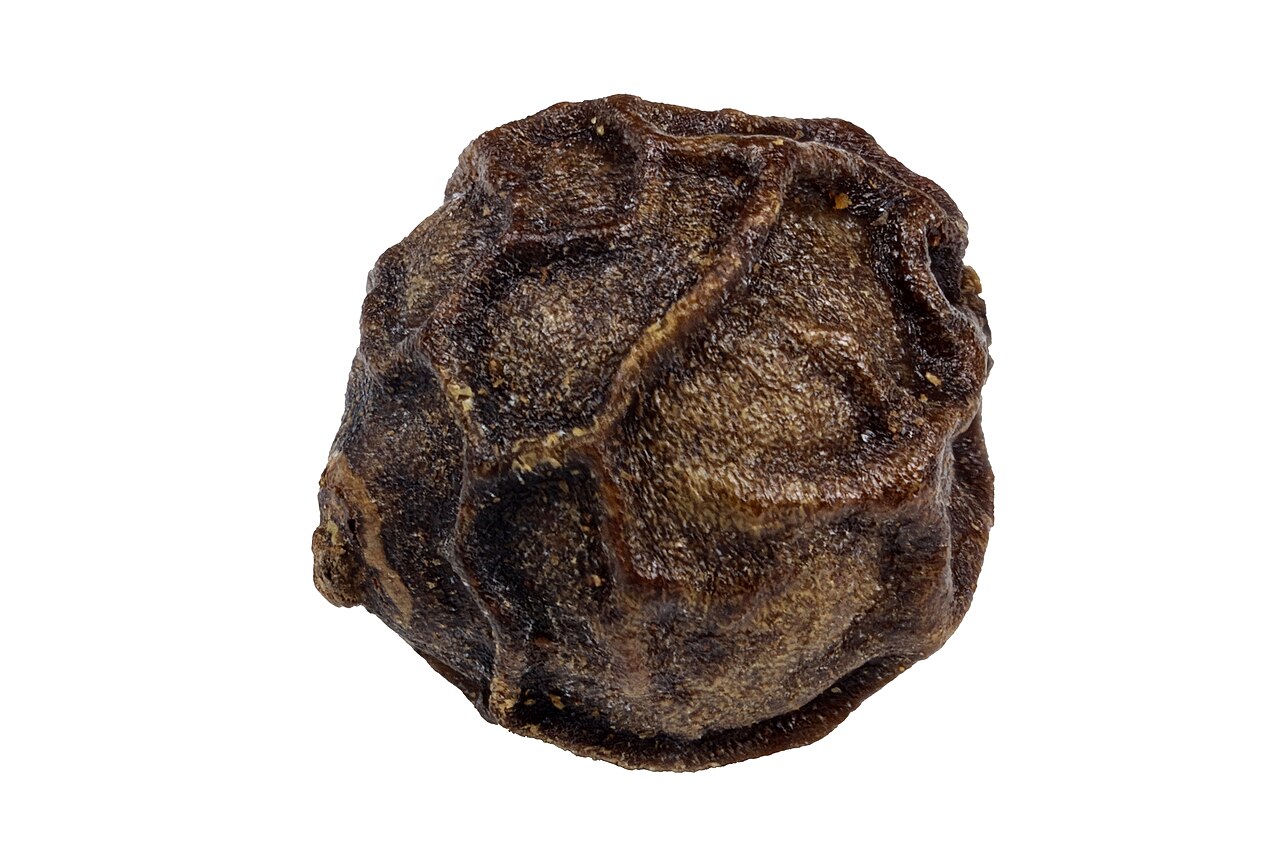
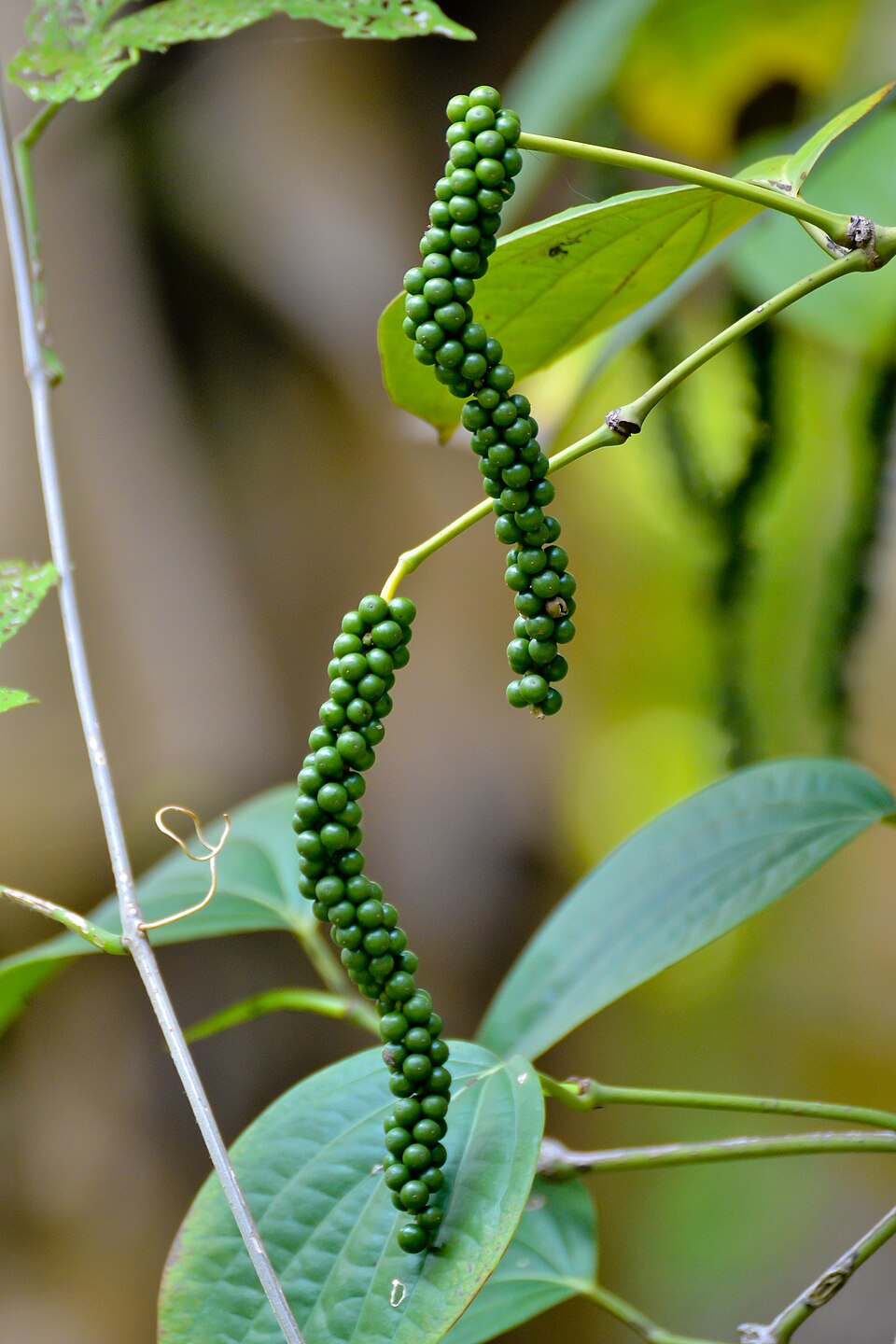
The wrinkled peppercorn in the kitchen begins as a green drupe growing in dense hanging spikes.
A SMALL BERRY WITH A GLOBAL REACH
Black pepper is the dried fruit of a perennial climbing vine. Its sharp aroma and remarkable keeping quality helped make it one of history’s most widely traded spices.
Its cultural and commercial story is inseparable from India’s Malabar Coast, whose pepper ports connected growers with merchants moving across the Arabian Sea and onward to Africa, Europe and Asia.
MANY LANGUAGES · ONE SPICE
THE JOURNEY
A simplified cultural timeline—each period opens a larger chapter in the history of exchange.
Pepper cultivation developed in humid tropical landscapes, supported by living trees and seasonal monsoons.
Maritime trade carried Malabar pepper through Arabian ports and across interconnected Asian markets.
Pepper’s portability and intensity made it a durable, high-value cargo over long journeys.
Today black pepper is cultivated across tropical Asia and in parts of Africa and the Americas.
FROM VINE TO PEPPERCORN
The perennial vine grows upward on support trees or posts in warm, humid conditions.
Slender spikes develop clusters of small fruits that mature from green toward red.
Fruit spikes are gathered at the maturity suited to the desired pepper style.
Drying produces wrinkled black pepper; other handling produces green or white pepper.
THE SENSORY PROFILE
Freshly cracked pepper releases more than a single sharp note. Depending on origin and handling, the aroma may suggest wood, citrus peel, resin or flowers.
RESEARCH LENS
Piperine is a principal pungent compound studied in black pepper. Laboratory findings do not automatically establish a clinical benefit, dosage or treatment.
Divine Spices separates culinary tradition, historical use and contemporary scientific evidence. This profile is educational and is not medical advice.
STARTING SOURCES